
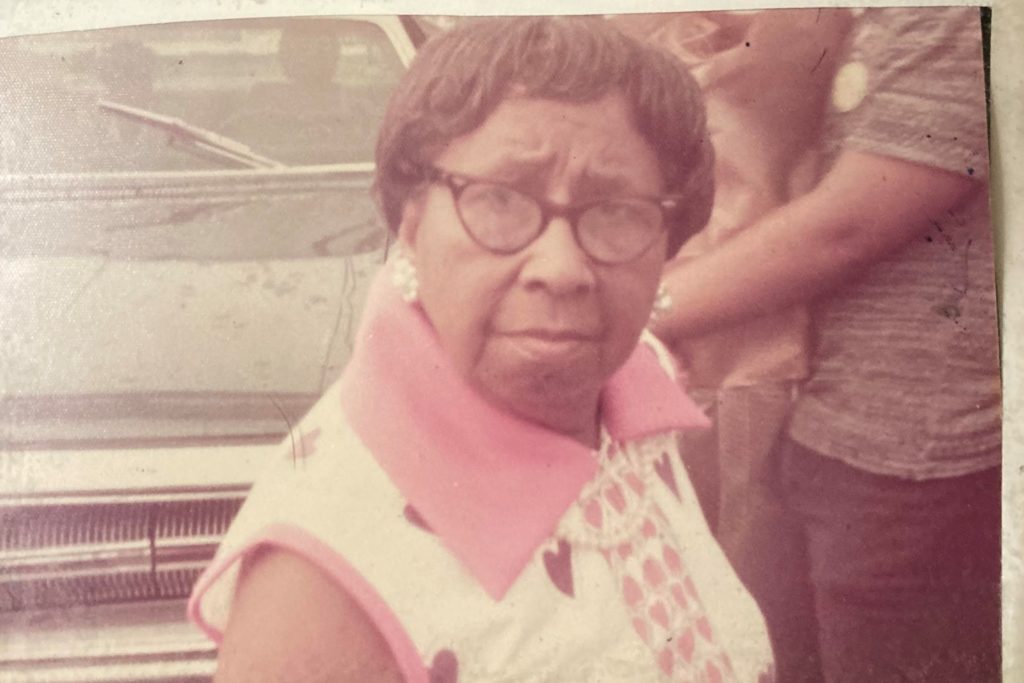
My Nana, who was my maternal grandmother, was a major influence in my life.When I was a little girl I spent a lot of time with my grandmother and years after her death, I would appreciate her presence in my life more than I ever imagined.
My grandmother,Marie Glover,was a laundress. She did the laundry for all the people who lived in the Parc Vendome, an exclusive building on W. 57th St. in Manhattan,New York. She was a part of a team of women (mostly black), who washed, dried, starched, and pressed shirts, sheets and various other sundry items for the very wealthy tenants of that building, including one who made sure to gift me with a Steiff stuffed animal every Christmas. The laundry was located in the basement of the building. During the times I would spend with my grandmother, I would go with her to her job at the laundry and sit all day reading, coloring, and talking to the other ladies who worked there. I remember the smells of the laundry,the scent of freshly washed sheets mixed with the smell of steam coming from the metal and black irons.There was a hustle and a bustle in that laundry as the women moved quickly to and fro washing, shaking out, drying ,ironing and finally folding everything and placing them into wicker laundry baskets which were later carried upstairs to the various tenants.This was what you would call a full service building,catering to the needs of it’s well heeled residents. At the end of the day my grandmother would hold my hand tightly and we would take the service elevator up to the first floor ,walk to the front of the building and the doorman would hail a cab that would take us back up to her apartment in Harlem. My nana lived in a building that would eventually be demolished making way for a new wing for Harlem Hospital. Ironically it is in this hospital that I was born.

My nana, the only grandmother that I ever knew, had a larger than life persona. She grew up in South Carolina and at the age of 15 came to New York. She settled in Harlem where she remained until the mid-60s when she would move to the Bronx. I loved to visit her and did so often. She was a simple woman, and would just chat with me, or asked me to run an errand or two, but basically I would eat her scrumptious breakfasts and dinners, and gaze outside of her window as I dreamt of what my life might be like in my far and distant future. She was a stocky woman, with a good heart, plain not fancy. She always seemed old to me, and always looked the same. I loved my Nana, who always gave me good advice which I would fall back on, even to this day. “Make sure you get your education.” “Always have your own.” Timeless words from a wise,smart and humble woman. You didn’t talk back to her or disobey because she could be quite stern, but when I was in her care she treated me lovingly, in a no-nonsense kind of way, and when we were out she held my hand tightly and wouldn’t let me out of her sight. She loved to tell her friends at work about my good grades and how talented and artistic I was.
Sometimes we would walk up 59th St. passing a fancy ice cream parlor called Rumplelmayer’s which was located in the old St. Moritz Hotel, now the Ritz-Carlton. Whenever we passed I would stare at the beautiful carousels and Steiff stuffed animals that were artistically and elegantly displayed in the windows. I asked my grandmother if we could go inside and she would always say, “Uh uh baby, colored people don’t go in there.” In my mind I couldn’t imagine that there were places that I couldn’t go, and I was sure I could go anywhere. I would tell my grandmother that and she would say, “Well by the time you grow up, baby, maybe you will be able to go in there.” Her friends, Miss Vi and Miss Nelline, would nod in agreement and repeat some variation of, “Yes baby, one day you’ll go there.”

There were many places in the North, New York City included ,that practiced de facto segregation(and not just in halls of learning).Many African Americans migrated from the South, after having experienced untold stories of racism, segregation, brutality, and worse in their hometowns. New York and other northern cities offered better opportunities for the futures of their families. However, they stuck together, and with few exceptions, would not have ventured into establishments where they might be seated in the back, been given delayed service or not seated at all. In the exclusive building where my Nana worked in (there were four buildings actually that surrounded an inner garden), with it’s doormen, carpeted hallways, and duplex apartments with built in mahogany libraries, there were “no colored” living there, but plenty working there as maids, laundresses, handymen and a select few doormen. It would remain that way for years to come.
The years wore on and during my college years, in summer, I would occasionally go to the laundry and help my Nana wash and iron.She was still bragging about my grades and how I was almost done with college and, although today I rarely iron, I actually learned to iron very well because of my experience working with Nana in the laundry. Later, as a young woman about to graduate college, when I left my grandmother and the Parc Vendome, I’d stroll up 57th St. stopping in Bergdorf’s, Bendel’s and other fancy stores, glad to be almost done with undergraduate school, anticipating my unknown life ahead.
My nana retired in the late 1970s.She spent her days hanging out with her good friends, traveling (sometimes taking me along), and spending time with us, her family. She hosted dinners for the holidays for many years until she couldn’t. She had been married three times, a widow once, many years before. She remained unmarried for the rest of her life.
One day in the late 70s, I noticed that the once majestic Parc Vendome, having lost some of its grande dame appeal as more modern buildings popped up, casting a shadow over it’s once grand pre-war edifice, had become a rental building. The very large apartments had been cut up into smaller studios, one and two bedroom apartments. I decided to go see what was available .When I arrived at the building, the rental agent and I chatted. I looked at a studio apartment and did mention to her how my grandmother had worked in the building for over 30 years. She asked me if I wanted to go see the laundry, I said yes and the elevator man took me down to the basement. As I got out I was immediately transported to the time when my Nana and I, she holding my hand tightly ,made our way down the long winding corridor. There had been clanking pipes, in those bygone days,as the steam traveled through the pipes warming the huge building, now replaced by silence. I could still smell the steam from irons and hear the faint sound of music coming now from transistor radios as opposed to the plug-in style of the 50s and 60s. I walked along wistfully and, when I came to my grandmother’s laundry, I stopped and peeked in. The laundry of my Nana’s day had been replaced by modern washers and dryers and collapsible ironing boards no longer made of wood. When I was a child the way the clothes were dried was on a series of rods that slid in and out of a corridor that had flames shooting up from the bottom of the dryer. That area was off limits to me, and I must admit it was pretty scary. Now that room had been replaced by spanking new automatic dryers that spun around silently and quickly dried the clothes.
As I stepped into the room I didn’t recognize anyone who knew my grandmother, as all the familiar faces were gone. I looked around and as I began to feel overwhelmed with memories and experienced mixed feelings of sadness and melancholy I turned and walked out, never to return again. I rang for the elevator to come down and the elevator man said the rental agent told him my story. He said, “Your grandmother must be so proud of you.” As I got off the elevator the rental agent was waiting for me, with tears in her eyes. She couldn’t get over the story of how my Nana had worked in the building and here I was looking for an apartment in the building she had worked so very hard in most of her life. She said that it made her day and she wished me luck as I began my life’s journey. My Nana would live another 15 years or so. She continued to advise and be the attentive loving guardian of her family.

As for Rumpelmayer’s, I did eventually get to go there several times before it eventually closed. It was a very fancy place on the outside but over time it’d lost it’s patina.The once exclusive purveyor of desserts and tea was soon to be to be replaced by fresher more contemporary ice cream parlors like Serendipity to name a few. I remember it as being a rather unpretentious, but comfortable place to eat. They had the best desserts, hot fudge sundaes and a wonderful tea room that was comfortable enough to sit in and take tea alone. I had, as my Nana and her friends predicted, begun to go places that they never dreamed of going. Things were beginning to change as more people of color emerged in places of prominence in prominent places and positions in cities around the US. Although we have had an African American president, there are still many miles to go, but since I was a child we’ve come very far. Small steps, but important ones, as I always felt that I should be able to go wherever I wanted to go, even if no one else wanted to go with me. I realize also that my grandmother wanted that for all her grandchildren. She wanted us to get our education, and to be free to do whatever we wanted to do and go places that my grandmother and her friends never dreamed of going.
I miss my grandmother, strong and dignified. She was very grandmotherly, a simple, very proud, hard-working woman who would survive three husbands and go on to create a life that was full of all the things she enjoyed and watch her four grandchildren graduate from college and make lives of their own.
Her strong work ethic, discipline, never giving up, and faith in God are what have become the hallmarks of my Nana’s legacy. A loss so great, but her spirit and the memories of our times spent together are what feed my soul and remind me that life is a continuum, made up of many events that impact our lives. All of us build a foundation for those who come after us. It is important that we are mindful of this and remember that what we do in life will become the underpinning for the lives of our children and our children’s children. We want them to do better, go farther, see more, do more than us. That is the legacy that we leave when we are gone. That is what my Nana did and I am who I am because of her.
Author’s Note: My husband held my hand tightly often as we walked together, always a reassuring, intimate time between us. It was reminiscent of my grandmother’s reassuring hand in mine.
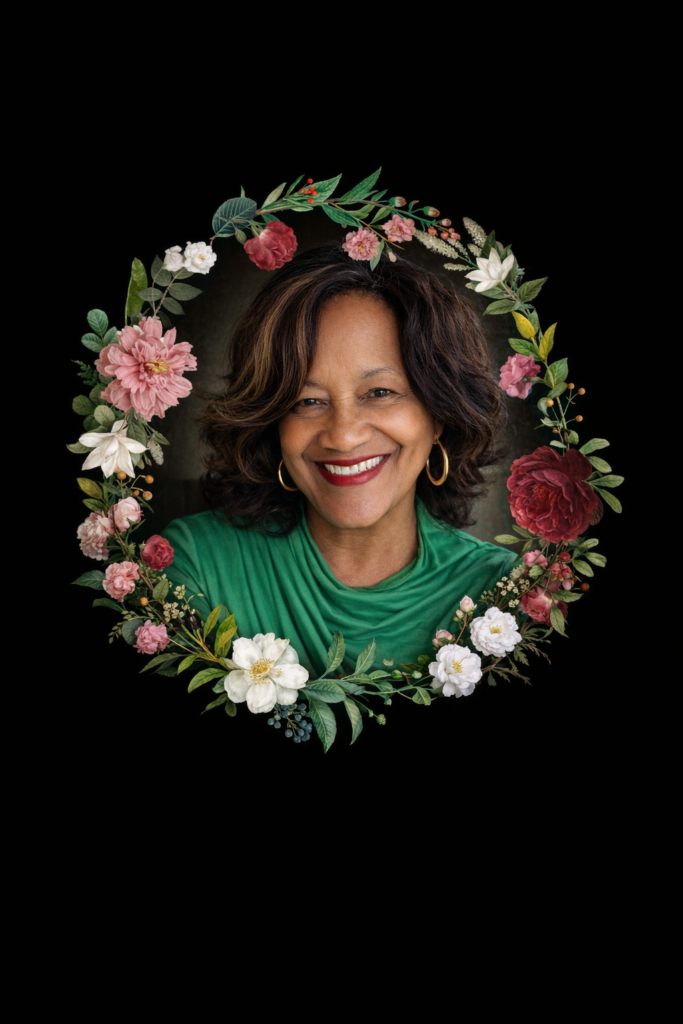
In the background of my author’s photo, taken by childhood friend Joan Siegel-Torres, there is a reflection of the Parc Vendome in the back of me. Very unintentional and an unexpected surprise.
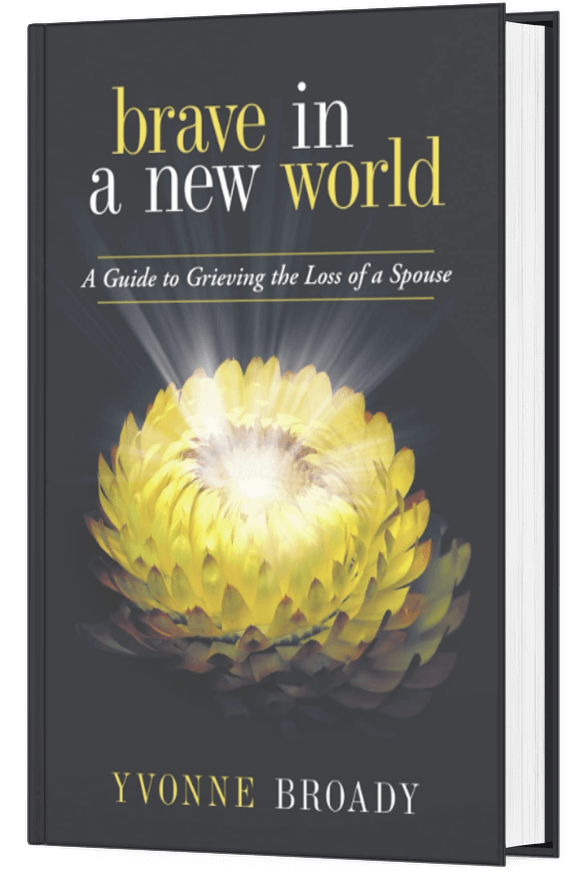
Brave in a New World: A Guide to Grieving the Loss of a Spouse available at Amazon.com.