
My late husband Chuck was a real pack rat. He kept mementos from his high school days, college years, and business career. There were old report cards, letters, playbills, and stacks of record albums. He even kept his college beanie emblazoned with the “H” representing his undergraduate alma mater, Howard University. Those treasured items, along with his faded Howard athletic tank top, were tucked away carefully inside a duffel bag in the closet.
We were city apartment dwellers with no basement to hide away years of memorabilia and keepsakes. Still, Chuck often pulled out that old Howard shirt and wore it proudly around the house. My husband loved to read and amassed a huge collection of books over the years. He reread many of his favorites, most often those centered on world history, American history, wars, and the occasional mystery novel. Every day he devoured the local papers, along with The Financial Times and The Wall Street Journal.
I, too, am a collector of things: old postcards, letters, jewelry, notes from long-gone relatives and former beaus, cherished correspondence from pen pals, and the letters my parents sent while serving in the Peace Corps during the 1980s. I have old photographs and lovely Limoges boxes, along with a collection of beautiful timepieces I once wore regularly. But these days, I’ve become so attached to my Apple Watch that my treasured watches rarely see the light of day. I still have many of the books my son read as a little boy, and some of his baby clothes neatly tucked away possibly for a future grandchild.
I also used to hold onto classic pieces of clothing, convinced they would someday come back into style: a crisp white button-down shirt, black ankle pants, Mary Jane shoes. And although I was occasionally right, when those fashions eventually returned, they usually reemerged reimagined to suit a newer generation and a different moment in time. I often pleaded with my husband to throw away the mountains of papers he had accumulated over the years. He always promised he would, but he never truly did. Those piles became a kind of security blanket for him. The higher they grew, the safer and more secure he seemed to feel inside his fortress of memories.
Ironically, Chuck’s attachment to “things” made me more aware of my own tendency to hold onto things. Because of that, I tried to keep myself in check and periodically let go of items that no longer held special meaning for me.
He Was Finally Inspired to Purge
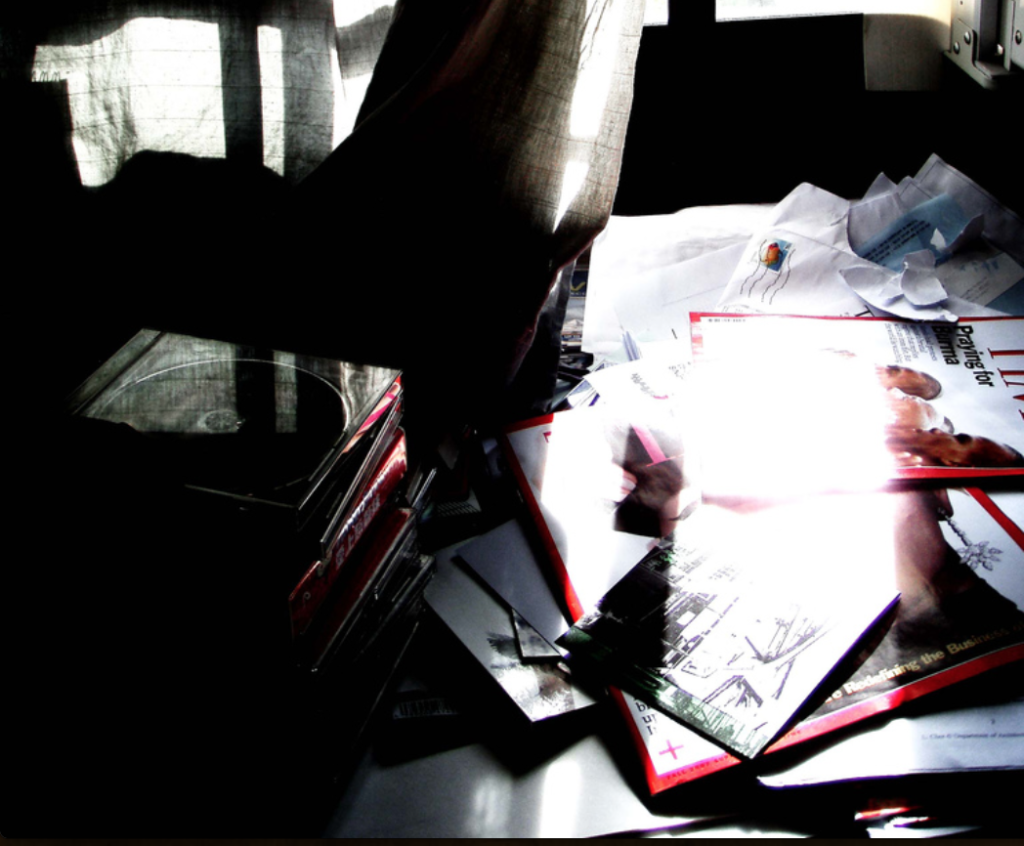
After Chuck died, I was faced with countless decisions, one of the most difficult being what to keep and what to throw away. The year Chuck became ill was the year he finally “got it,” though sadly it came a bit too late. During that time, while I was at work, he quietly sorted through years of papers, photographs, and documents, slowly beginning to release an accumulation of decades worth of “stuff.” The items he treasured most, he carefully placed into an album. Awards, commendations, letters, photographs, and precious mementos all found their place there. He was creating a visual legacy because somewhere deep inside, he knew his time here was limited. It would be a long while before I could bring myself to pore over his carefully curated collection. These were the pieces of his life he believed would tell his story and leave his mark in this world.
A Very Sacred Task
Eventually, I edited my husband’s belongings and kept only the things that held true meaning for me.That sacred task caused me to reflect on my own assortment of keepsakes: correspondences, journals, postcards, photographs, handwritten notes, and memories tucked away in drawers and boxes. I realized I was holding onto many things from my past that no longer carried the same emotional significance they once had.
There were old photographs of grammar school friends whose names I could barely recall. Textbooks with tattered covers from undergraduate psychology courses and graduate school philosophy and education classes lined my bookshelves. They made my library appear impressive, but the truth was, I never opened them anymore because they no longer reflected who I had become.
I uncovered drawings I had created years earlier during classes at the Brooklyn Museum and the Art Students League of New York. Those sketches reminded me that I had once dabbled in pen and ink and watercolor, happily drawing portraits of anyone willing to sit for me — usually a reluctant sibling.
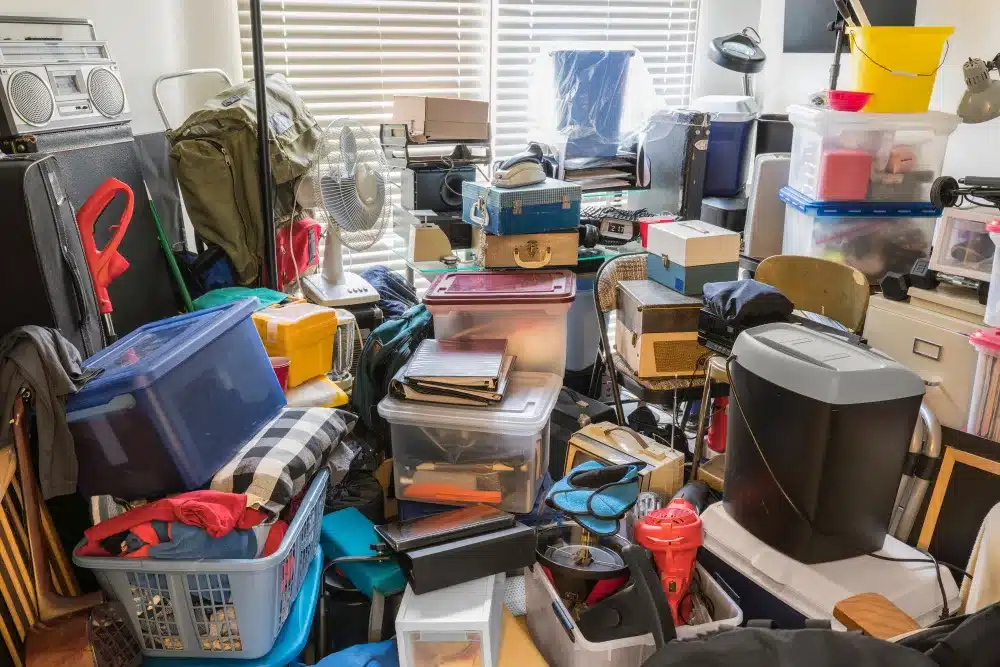
As I purged, I came to an important realization: many of these objects belonged to a version of myself that no longer existed. I no longer needed to prove my intellect, my creativity, or my worth to anyone. I was simply me — after all was said and done. I also realized that I did not want to leave my only son with endless boxes of possessions to sort through someday, many of which would hold little meaning for him after I was gone. In recent years as friends I’ve had have passed away, when relatives went in to sort through their belongings, without exception, they’ve found tons of items including books, clothing, photos, souvenirs and various and sundry other miscellaneous stuff. Those who are left have had to sift through those things as they discovered that the person was a secret hoarder. I do not wish to leave others with the burden of sorting through my life here on earth.
A Final Act of Love
As I sorted through my belongings, I began to feel lighter and freer. It reminded me of arriving at a beautiful resort with only the bare necessities packed in a suitcase, breathing a sigh of relief as the noise and heaviness of everyday life faded into the background.In many ways, my husband unknowingly inspired me to do my own emotional and physical housecleaning.There was already so much to endure after he died, so the fact that he considered me during his final days — taking the time to organize and release much of the clutter — felt like an extraordinary and selfless act of love.I didn’t have to wonder who certain people were in photographs or why specific documents mattered. He spared me some of the sorrow I surely would have felt while touching and smelling items so deeply connected to his life here.The memories stirred up by my own decluttering became snapshots of another lifetime and another version of myself. And although many of the physical objects are now gone, the memories themselves remain permanently etched in my heart and mind, accessible whenever I wish to revisit them.I realized I no longer needed material things to validate or relive my past, particularly as I was learning to embrace a new beginning.
The Past Can Block the Future
As time passes, we accumulate so many things we no longer use and rarely even look at. Those possessions can become a kind of emotional security blanket, but they can also quietly prevent us from moving forward.Of course, there are collections worth preserving — treasured heirlooms, meaningful keepsakes, family artifacts, and items future generations may one day value as they search for traces of those who came before them.But often, what remains is simply an accumulation of memories that keeps us tethered too tightly to the past instead of allowing us to fully inhabit the present.I’m not suggesting we discard the treasures that tell our stories or the precious items passed down from beloved ancestors. But at some point, we must ask ourselves whether every object we save will truly carry meaning for those left behind.
Our loved ones may not understand why we kept a collection of coins, or who the faded faces are in old photographs, or why a delicate handkerchief was folded carefully inside a Ziploc bag. Eventually, I decided to lock many of those memories safely inside my heart and spare my son the burden of piecing together a puzzle after I’m gone. I have discovered that there is something deeply liberating about living with less instead of more.A life well lived is ultimately not measured by the possessions we leave behind, but by the experiences we gather, the love we shared, and the memories etched into the hearts of those we touched.Sometimes, without even realizing it, we cling so tightly to the past that it quietly prevents us from fully living in the present.I let go of my husband’s belongings gradually over a five-year period. In the beginning, I hurriedly gave away most of his beautiful clothing because I feared that if I waited too long, it would become impossible.I could not bear opening the closet each day, pressing my face into his coats and shirts while overcome with grief, weeping and weeping over and over again.
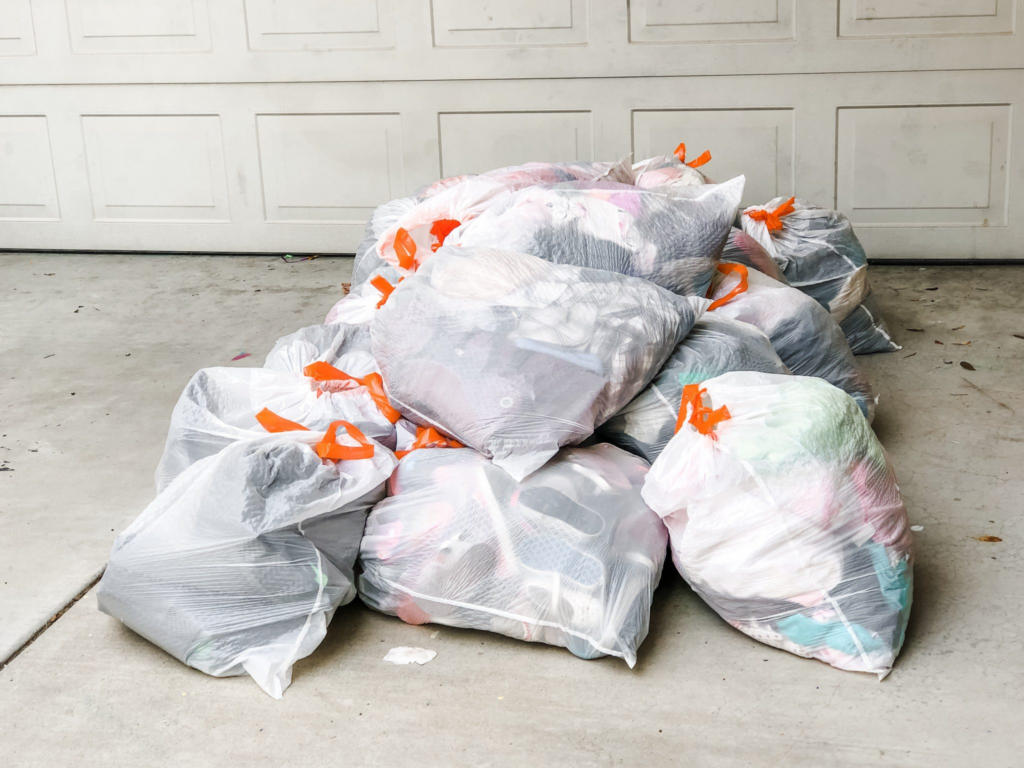
There was already enough pain without the looming task of sorting through every reminder of him.Smaller things — cufflinks, watches, glasses, gloves, handkerchiefs — took more time. Some I eventually shared with relatives and nephews whom Chuck dearly loved.Time offers perspective. Little by little, I was able to keep a modest collection of meaningful possessions without becoming emotionally overwhelmed by the weight of holding onto everything.
Opening a Portal to New Experiences
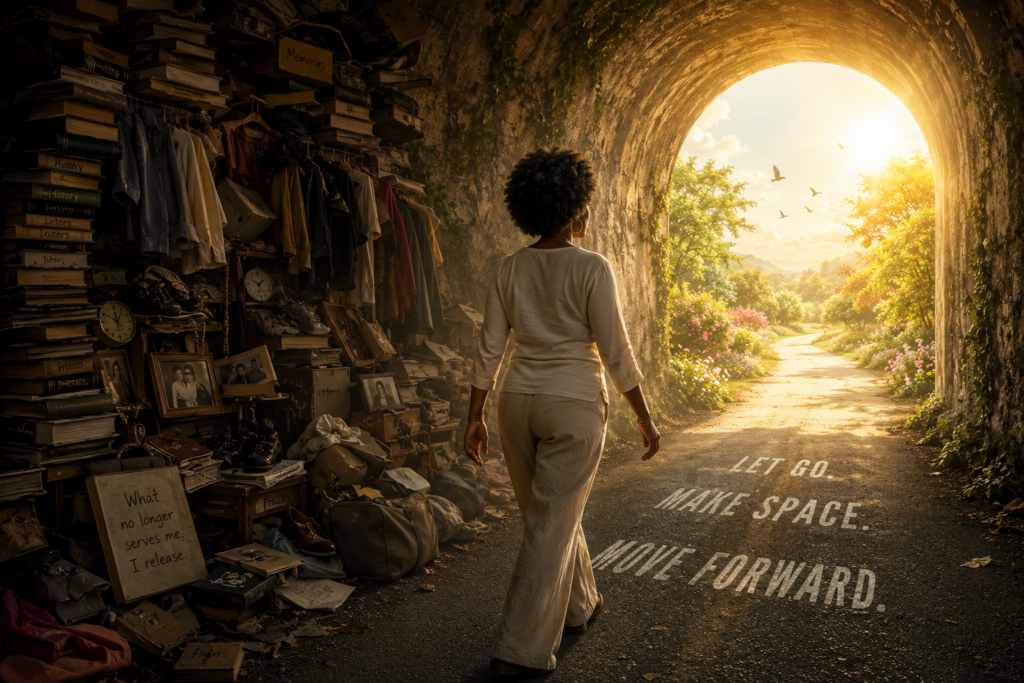
At some point, we must gently examine the items we carry from our past and ask ourselves whether we truly need to hold onto all of them. Certainly, we will keep some cherished belongings from those we have loved and lost. But we may also discover that as we gradually release the objects that no longer hold the same meaning they once did, we create space for something new.
New experiences.
New memories.
New chapters.
Life is finite, and our stories are always unfolding. Let’s make room for what is still waiting to bloom while carrying the old memories safely within our hearts.
Blooming always 
You can follow me on Instagram https://www.instagram.com/thebloomingwidow/
You can like my Author’s page: https://www.facebook.com/YvonneBroadyAuthor/
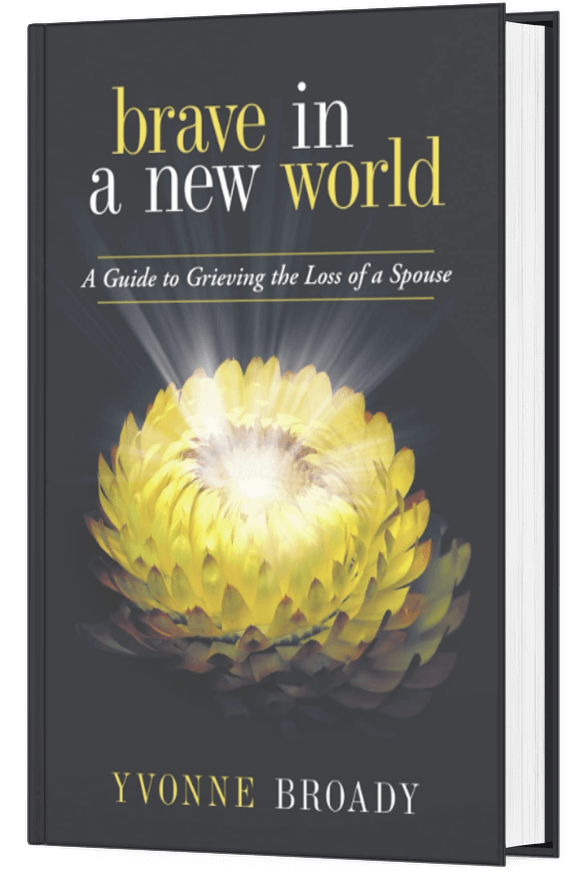
You can purchase my book Brave in a New World: A Guide to Grieving the Loss of a Spouse on Amazon https://tinyurl.com/3s2d854z